
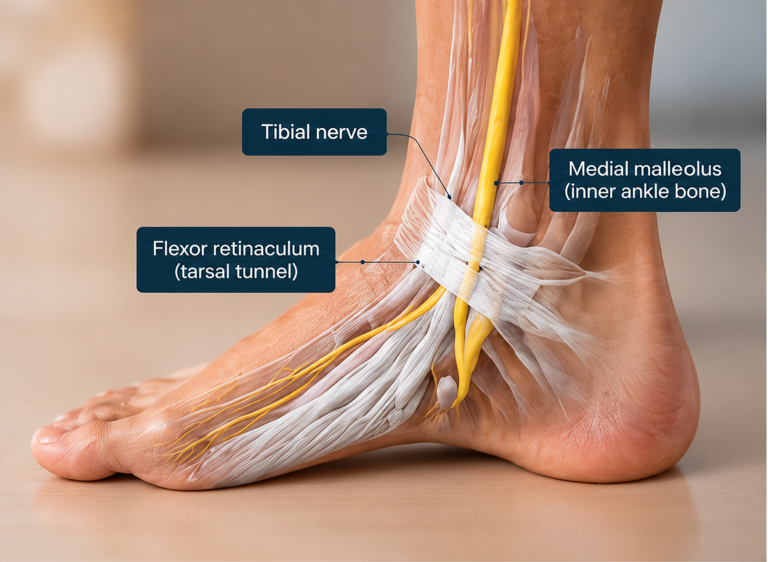
Tarsal tunnel syndrome occurs when the tibial nerve is compressed as it passes through the tarsal tunnel on the inside of the ankle. A detailed assessment can help identify the underlying cause and guide appropriate treatment.
Detailed history, examination and vascular ultrasound
tailored to your specific findingsand goals.
experienced team in complex vacular management
conservative and interventional options when appropriate
Tarsal tunnel syndrome happens when the tibial nerve on the inside of your ankle becomes compressed or irritated. When pressure builds up around it, you may experience pain, tingling, burning or numbness in your foot, and can sometimes get worse after standing, walking or exercising for long periods.
Compression of the tibial nerve within the tarsal tunnel can cause pain, tinging and numbness in the foot and toes
May be related to anatomical variations, swelling, varicose veins, previous injury or other space-occupying lesions.
Symptoms can affect walking exercise and daily activities, and may vary in severity between individuals.
Symptoms can vary depending on whether the nerve, vein or artery is affected. Common symptoms include:

We take a comprehensive approach, combining your history and symptoms with a detailed clinical examination and targeted vascular ultrasound. In selected cases, further imaging such as CT scan or nerve conduction studies may be recommended to confirm the diagnosis and assess the degree of compression.
The tarsal tunnel is a small, enclosed space on the inner side of the ankle, surrounded by bone and a strong band of tissue. Several important structures pass through this space, including nerves, tendons and blood vessels. Because there is very little room for these structures to expand, even small changes within the tunnel can affect how the nerve functions. Over time, repeated pressure may interfere with the nerve’s ability to send signals properly, leading to changes in sensation and discomfort. In some cases, symptoms may come and go depending on foot position, activity levels and the amount of pressure placed on the ankle.
Treatment depends on the type and severity of your symptoms, We develop a personalised plan based on your diagnosis, lifestyle and goals.
Activity modification
Physiotherapy
Foot wear correction
Custom orthotics
Anti-inflammatory medication
An ultrasound-guided injection may deliver a corticosteroid and local anaesthetic near the affected nerve to help reduce inflammation and provide pain relief. Some patients experience symptom improvement following injection treatment, although the duration of relief varies
For select cases, we work closely with surgeons to organise surgical procedure reducing compression. Published studies report surgical success rates ranging from approximately 44% to 96%, reflecting differences in patient selection, underlying causes and how outcomes are measured.
A member of our team will be in touch soon. Please, allow 24 hours to receive a response to your online form submission.

Something isn’t Clear?
I will be more than happy to answer all of your questions.