Premium vascular assessment and personalised care.
Superior mesenteric artery (SMA) syndrome occurs when the superior mesenteric artery compresses the third part of the duodenum, leading to partial or complete blockage of the small intestine. A detailed assessment can help identify the cause and guide appropriate treatment.
EXPERIENCED CLINICAL CARE |
ADVANCED IMAGING |
PERSONALISED TREATMENT
Comprehensive assessment
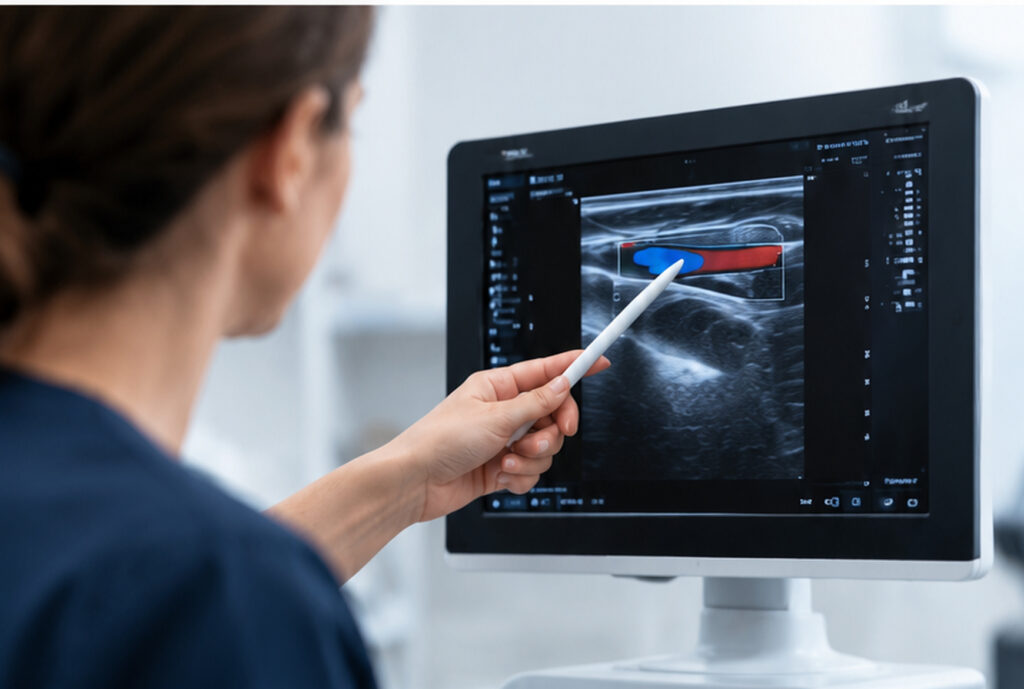
Detailed history, examination and vascular ultrasound
Evidence based management
tailored to your specific findingsand goals.
vascular care
experienced team in complex vacular management
personalised treatment plan
conservative and interventional options when appropriate
ABOUT SUPERIOR MESENTERIC ARTERY SYNDROME
understanding Superior Mesenteric Artery Syndrome
Superior mesenteric artery syndrome (SMAS) is a rare condition where the superior mesenteric artery compresses the third part of the duodenum, the section of the small intestine that passes behind the artery.
This compression can cause partial or complete blockage, leading to symptoms such as abdominal pain, nausea, vomiting, bloating and difficulty gaining weight.
Digestive compression
The SMA compresses the third part of the duodenum, causing a narrowing of the intestinal passage.
Left Renal Vein compression
External pressure from surrounding left renal vein can restrict venous outflow contributing to kidney failure and pelvic congestion syndrome.
Multiple causes
Can be triggered by rapid weight loss, certain surgeries, congenital factors or chronic conditions.
Symptoms of Superior Mesenteric Artery Syndrome
Symptoms can vary depending on whether the duodenum or vein is affected. Common symptoms include:
Abdominal pain & bloatings
Nausea
Vomiting
difficulty gaining weight
left flank pain & blood in urine
our approach
a detailed and individualised assessment
We take a comprehensive approach, combining your history and symptoms with a detailed clinical examination and targeted vascular ultrasound. In selected cases, further imaging such as CT scan or nerve conduction studies may be recommended to confirm the diagnosis and assess the degree of compression.
The condition in detail
How Superior Mesenteric Artery Syndrome occurs
This compression can make it difficult for food and fluids to pass through the digestive tract, potentially leading to symptoms such as abdominal pain, bloating, nausea, vomiting, and feeling full quickly after eating. Symptoms may become more noticeable following meals, as food and fluid accumulate above the narrowed section of the intestine.
treatment options
Management tailored to your needs
Treatment depends on the type and severity of your symptoms, We develop a personalised plan based on your diagnosis, lifestyle and goals.
Conservative management
Activity modification
diet modification
Monitoring Urine and Kidney Function
Enteral nutritional support
Surgical referral
For select cases, we work closely with surgeons to organise surgical procedure reducing compression.