
Adductor canal compression may affect the femoral artery or saphenous nerve, causing exercise-related leg pain or altered sensation. Careful assessment can help identify the cause and guide appropriate treatment.
Detailed history, examination and vascular ultrasound
tailored to your specific findingsand goals.
experienced team in complex vacular management
conservative and interventional options when appropriate
Adductor canal syndrome refers to compression of the structures that pass through the adductor canal (also known as Hunter’s canal) in the mid to distal thigh, most commonly affecting the femoral artery or the saphenous nerve.
This can lead to exercise-related leg pain, changes in sensation around the knee and lower leg, and in some cases reduced blood flow to the lower leg.
Compression or irritation of the saphenous nerve can cause pain, tingling or altered sensation on the inner knee, lower leg and foot.
External pressure from surrounding muscles or fibrous structures can restrict venous outflow contributing to leg heaviness or a sensation of tightness.
Narrowing of the femoral artery in the adductor canal can reduce blood flow to the lower leg, causing exertional pain, heaviness or fatigue.
Symptoms can vary depending on whether the nerve, vein or artery is affected. Common symptoms include:
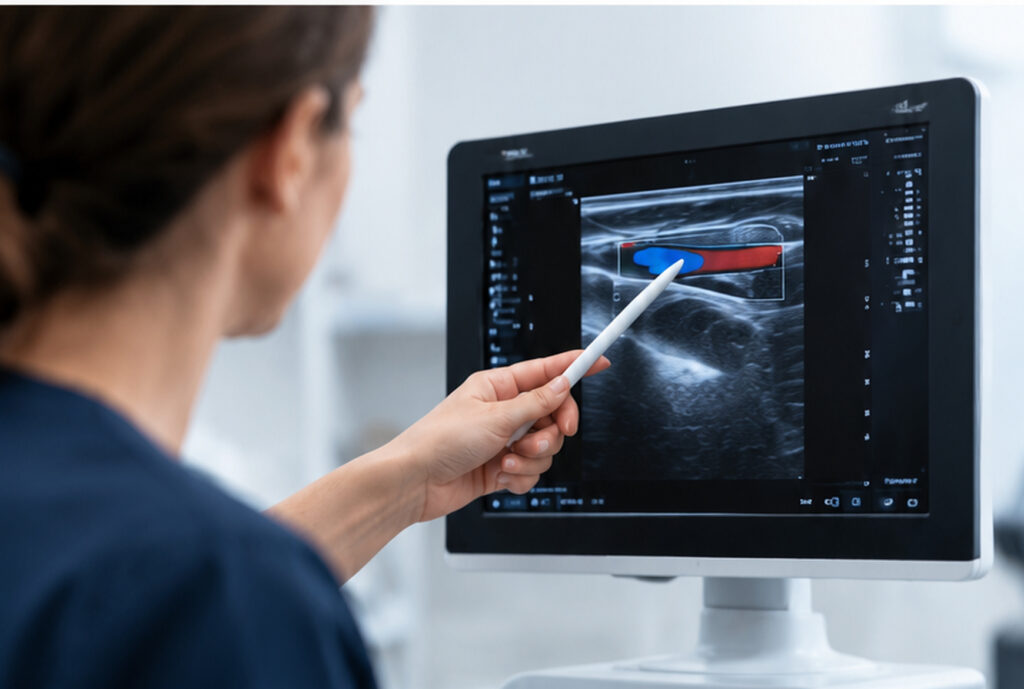
We take a comprehensive approach, combining your history and symptoms with a detailed clinical examination and targeted vascular ultrasound. In selected cases, further imaging such as CT scan or nerve conduction studies may be recommended to confirm the diagnosis and assess the degree of compression.
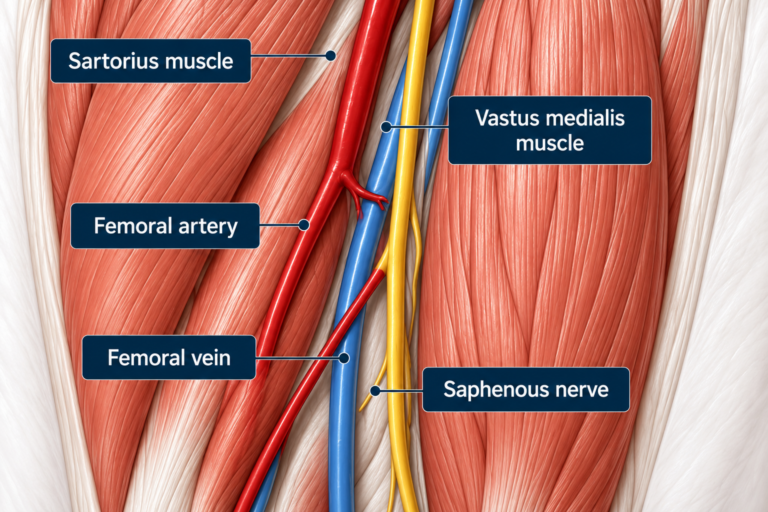
The adductor canal, also known as Hunter’s canal, is an anatomical passageway deep within the inner thigh. It lies beneath the sartorius muscle, between the vastus medialis and the adductor muscles, and is enclosed by a layer of connective tissue known as fascia.
In some individuals, the space within the canal may become restricted by thickened fibrous tissue, enlarged surrounding muscles, or variations in the normal anatomy. These factors can create pressure on the structures passing through the canal, particularly during physical activity when the thigh muscles contract and expand.
This compression is dynamic and becomes more pronounced during exercise or certain movements and may be minimal or absent at rest.
Treatment depends on the type and severity of your symptoms, We develop a personalised plan based on your diagnosis, lifestyle and goals.
activity modification
targeted physiotherapy
reducing mechanical irritation
improving muscle flexibility
When saphenous nerve entrapment is suspected, an ultrasound-guided injection of local anaesthetic, sometimes combined with corticosteroid or Glucose 5%, may provide symptom relief. These injections can also help confirm the source of pain and guide further treatment.
For select cases, we work closely with surgeons to organise surgical procedure reducing compression. This involves releasing restrictive fibrous bands or surrounding tissues to relieve pressure on the affected artery or nerve.
A member of our team will be in touch soon. Please, allow 24 hours to receive a response to your online form submission.

Something isn’t Clear?
I will be more than happy to answer all of your questions.