
Thoracic outlet syndrome (TOS) occurs when the nerves and/or blood vessels that pass between the collarbone and first rib become compressed. We provide comprehensive assessment to identify the underlying cause and guide the most appropriate treatment for your symptoms.
Detailed history, examination and vascular ultrasound
tailored to your specific findingsand goals.
experienced team in complex vacular and neurovascular management
conservative and interventional options when appropriate
The most common type involving compression of the brachial plexus nerves. It can cause pain, numbness, tinglings, weakness or heaviness in the neck, shoulder arm or hand
Compression of the subclavian vein can reduce blood flow, potentially causing arm swelling, a feeling of heaviness, visible veins or in some cases blood clots.
Less common. involving compression of the subclavian artery. May affect blood flow in the arm leading to symptoms such as ar fatigue, coldness or changes in skin colour.
Symptoms can vary depending on whether the nerve, vein or artery is affected. Common symptoms include:
TOS can be caused by a combination of anatomical, lifestyle and activity-related factors including:
• Narrow thoracic outlet or anatomical variations (e.g. cervical rib)
• Repetitive overhead movements or heavy lifting
• Previous injury or trauma to the neck, shoulder or collarbone
• Postural factors and muscle tightness
• Scarring or changes after a blood clot (venous TOS)

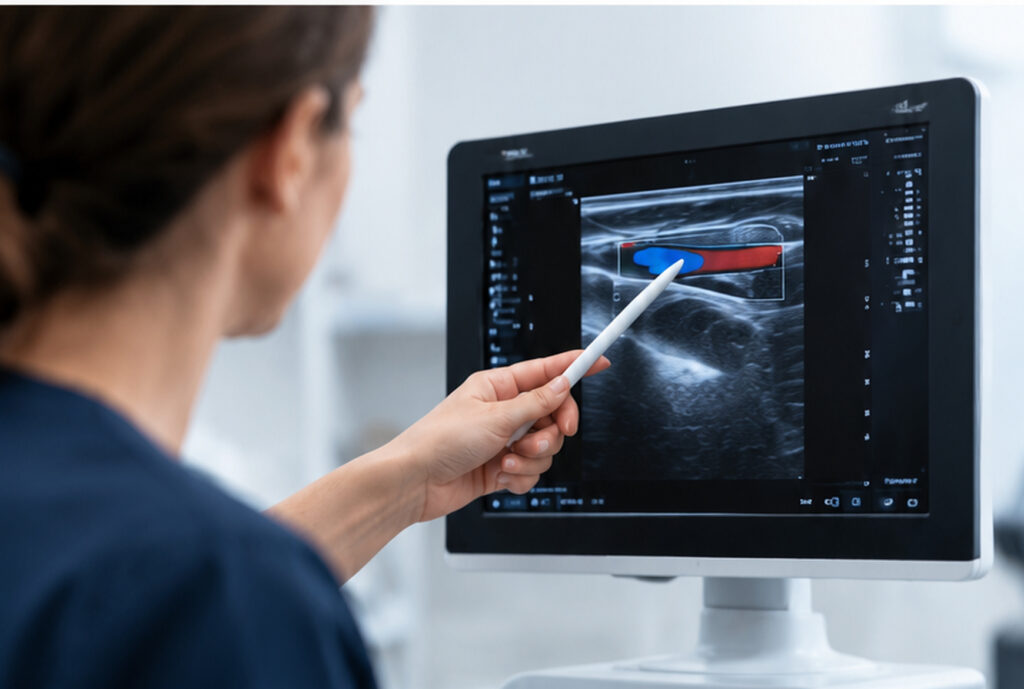
• Detailed clinical history and physical examination
• Vascular ultrasound (duplex) to assess blood flow and compressio
• Additional imaging (e.g. X-ray, CT or MRI) when required
• Assessment for associated conditions such as upper limb DVT or cervical rib
Treatment depends on the type and severity of your symptoms, We develop a personalised plan based on your diagnosis, lifestyle and goals.
Activity modification
physiotherapy or posture correction
Pain management
Ultrasound guided injection ( where appropriate) management of venous compression or blood clot
For select cases, we work closely with surgeons for first rib resection or other procedures when conservative treatments are not effective.
A member of our team will be in touch soon. Please, allow 24 hours to receive a response to your online form submission.

Something isn’t Clear?
I will be more than happy to answer all of your questions.