leg pain from veins

Recurrent Varicose Veins

Comprehensive Care, Lasting Relief
Conquering Recurrent Varicose Veins Together

Recurrent varicose veins can be a challenging reality for many individuals who have already undergone treatment. For patients, it is often not just a physical condition but an emotional journey that includes frustration, disappointment, and even feelings of hopelessness. Understanding the recurrence of varicose veins requires a deep and thorough approach to the hemodynamic of your vein circulation.

patient results for her ultrasound scan

Why do my varicose veins keep coming back?

Recurring veins do not necessarily mean your previous treatment was “wrong.” Vein disease can evolve over time. In some patients, new reflux develops in untreated pathways, including perforator veins, accessory trunks, or other vein segments that were not the dominant issue at the time of first treatment.

One significant cause is the presence of incompetent perforator veins—veins tacting like volcanoes and leading to new varicose veins

preventing recurrence

While there is no guaranteed way to prevent varicose veins from recurring, the following steps can help reduce the risk:

  • Maintain a healthy weight to minimize pressure on your veins.
  • Stay active with regular exercise to improve blood circulation.
  • Avoid prolonged standing or sitting; take breaks to move around when possible.


  • Wear compression stockings as recommended by your doctor.
  • Follow up regularly with a vein doctor to monitor your vein health.

How to treat recurrent varicose veins

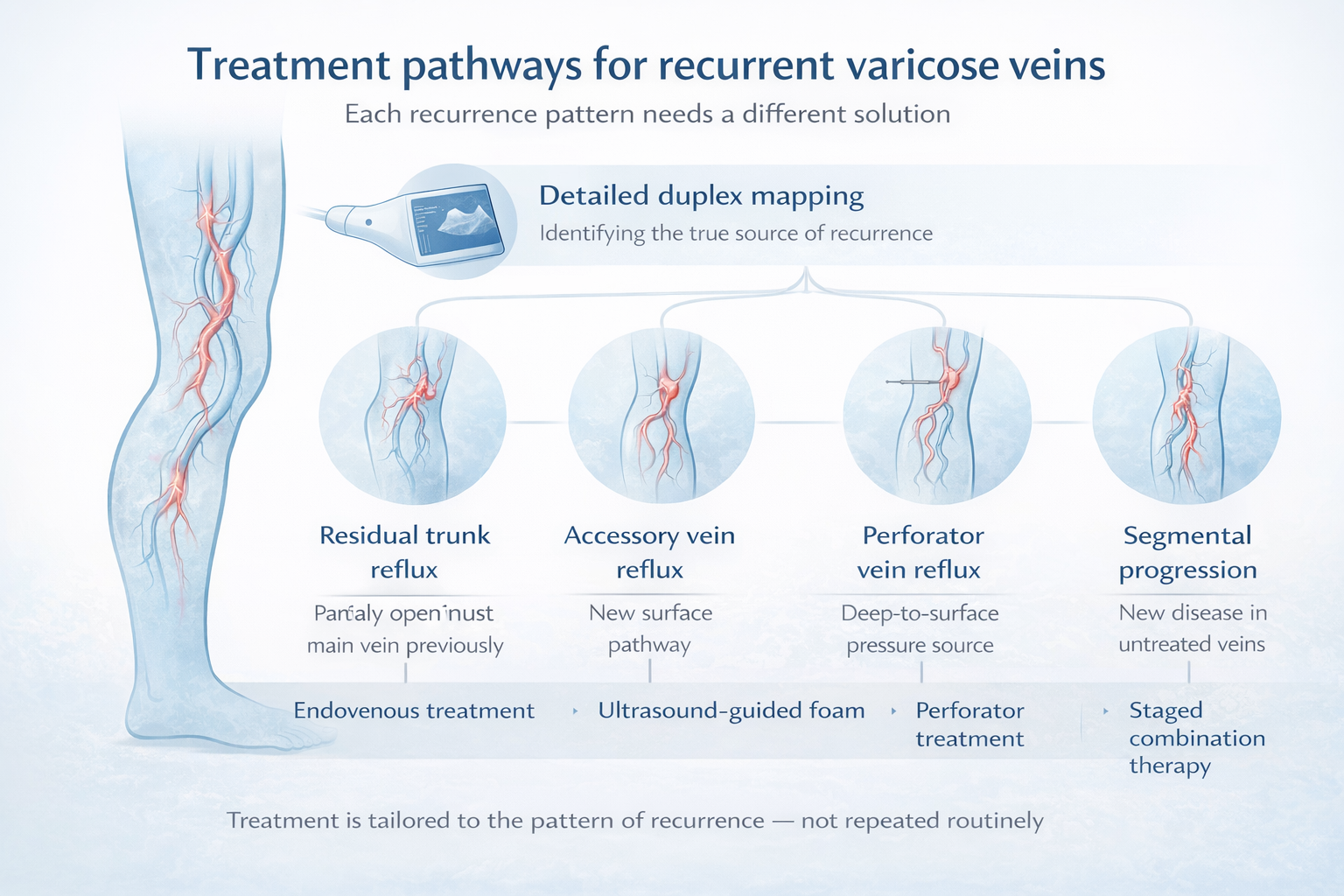
Recurrent varicose veins often require a more technical approach than first-time treatment. Depending on the pattern of recurrence, management may involve ultrasound-guided treatment, perforator-focused treatment, foam sclerotherapy, endovenous procedures, or staged treatment planning.


cream for vein applied on the legs

Why recurrent cases are different

In some people, recurrence is driven by perforator veins — deeper connecting veins that allow pressure to move back toward the skin instead of toward the heart.

This can lead to:

  • persistent varicose veins
  • localised swelling
  • skin irritation or discoloration
  • recurrence near previous treatment areas

These veins may not have needed treatment the first time, but they can become important later as vein disease progresses.

Because recurrence often involves new reflux pathways, reassessment usually requires fresh ultrasound mapping, not simply repeating earlier treatment.


Treatment pathways for varicose veins

Depending on what is found, treatment may involve:

  • newly refluxing veins
  • accessory vein pathways
  • perforator veins
  • ultrasound-guided foam therapy
  • staged or combined approaches

The aim is not just to treat visible veins again — but to identify what is driving the recurrence now and manage it more precisely

Contact us

We'd love to hear from you

Your form was successfully sent!

A member of our team will be in touch soon. Please, allow 24 hours to receive a response to your online form submission.

laurel clinical logo

Would you like to make a booking?

I’m Here To Assist You

Something isn’t Clear?
I will be more than happy to answer all of your questions.