
Most people assume varicose veins are easy to judge: if they look large and twisted, they must need treatment. If they look small, they must be harmless.
In reality, varicose veins don’t work that way.
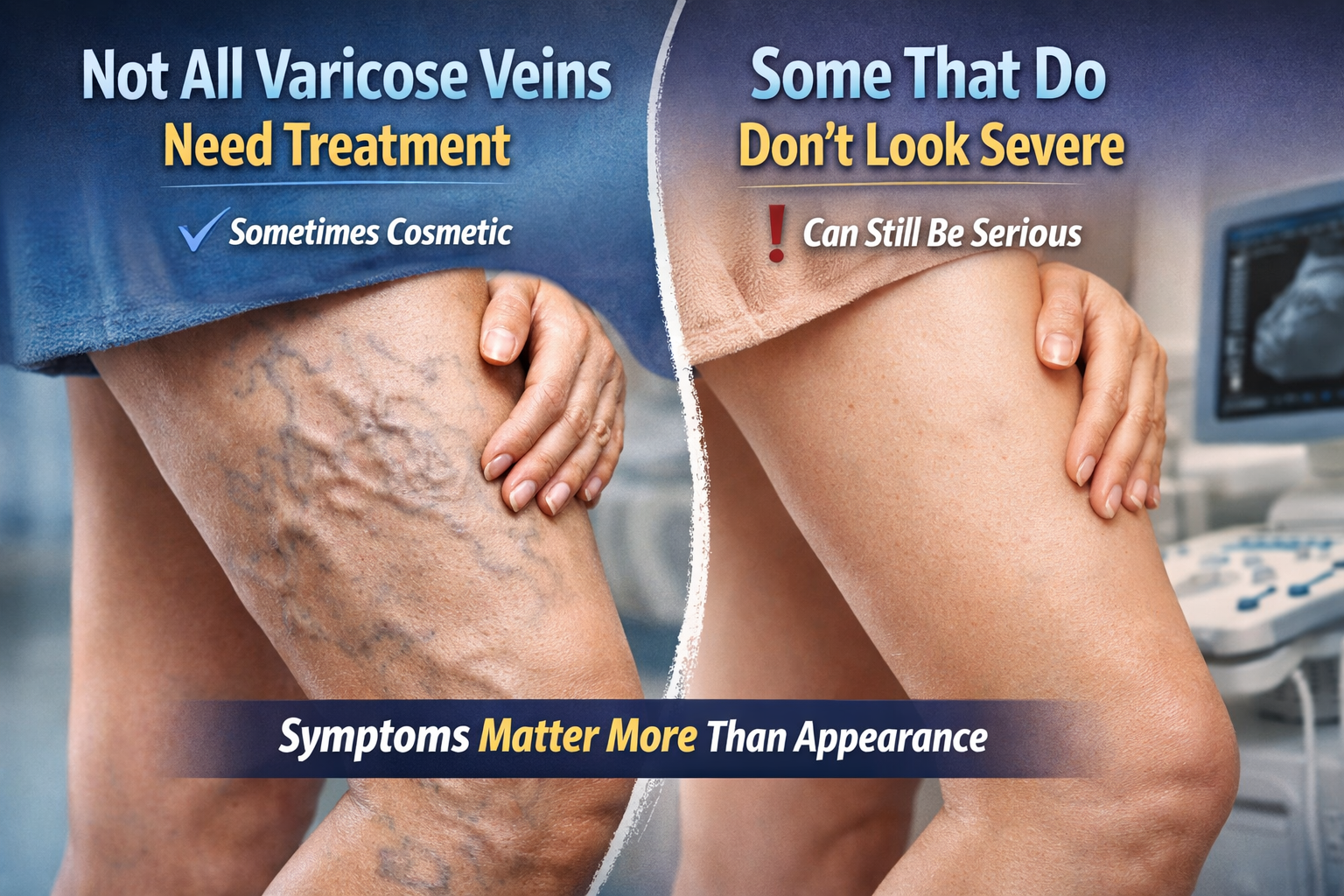
Some veins that look dramatic never cause medical problems. Others that appear mild on the surface can be linked to discomfort, swelling, skin damage, or circulation changes that deserve proper assessment. The decision to treat varicose veins is based far more on symptoms and underlying vein function than appearance alone.
Understanding that difference can help people avoid unnecessary worry — and avoid delaying care when it actually matters.
The mistake we keep seeing
We keep seeing the same misunderstanding again and again:
People decide whether their varicose veins need attention based only on how they look.
Many wait years before speaking to a vein doctor because their veins “don’t seem bad enough.” Others assume treatment is only cosmetic unless veins are very large. At the same time, some people seek treatment quickly for visible veins that are not actually the source of their symptoms.
This confusion is common, understandable, and fixable.
Why this misunderstanding persists
This issue doesn’t exist because people are careless. It exists because the system around them emphasizes appearance over function.
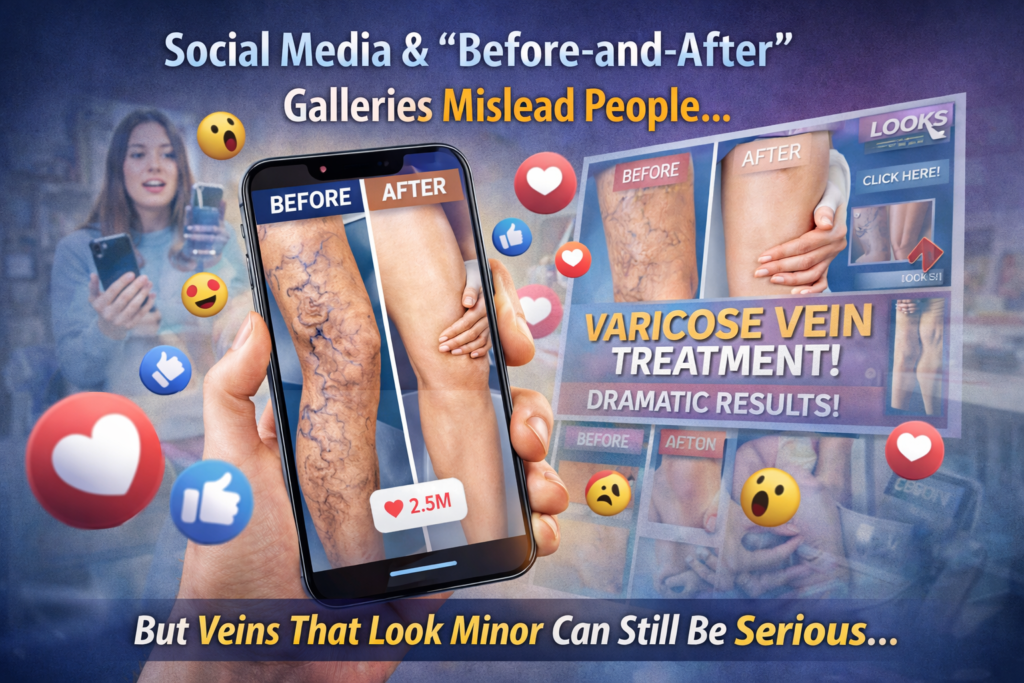
Most online images show dramatic before-and-after results. Social media highlights visible veins rather than circulation problems. Even everyday conversations describe varicose veins as a cosmetic issue unless they look severe.
As a result:
- symptoms get underestimated
- early warning signs get ignored
- treatment timing becomes inconsistent
- people delay assessment longer than they should
The problem is not individuals making poor decisions. The problem is that the information environment makes appearance seem like the main signal — when it isn’t.
What varicose veins actually are
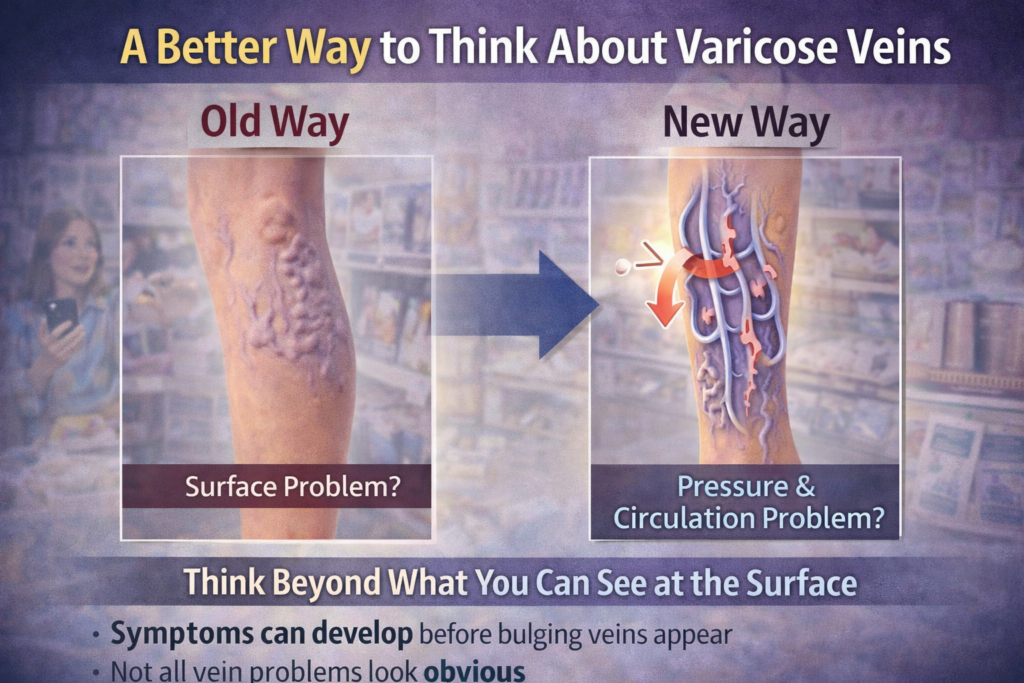
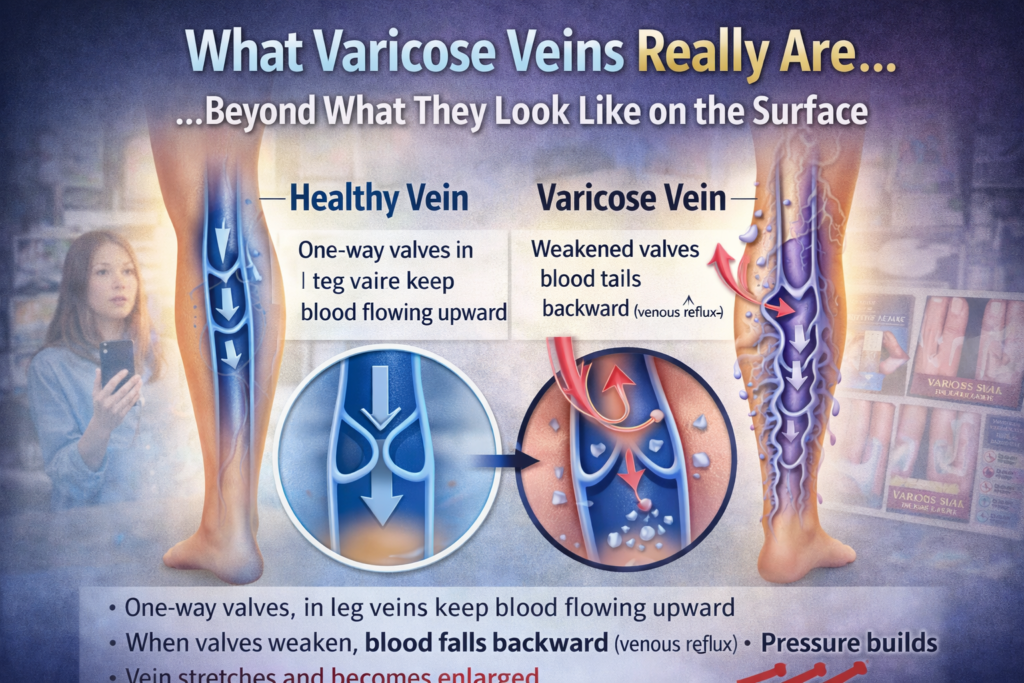
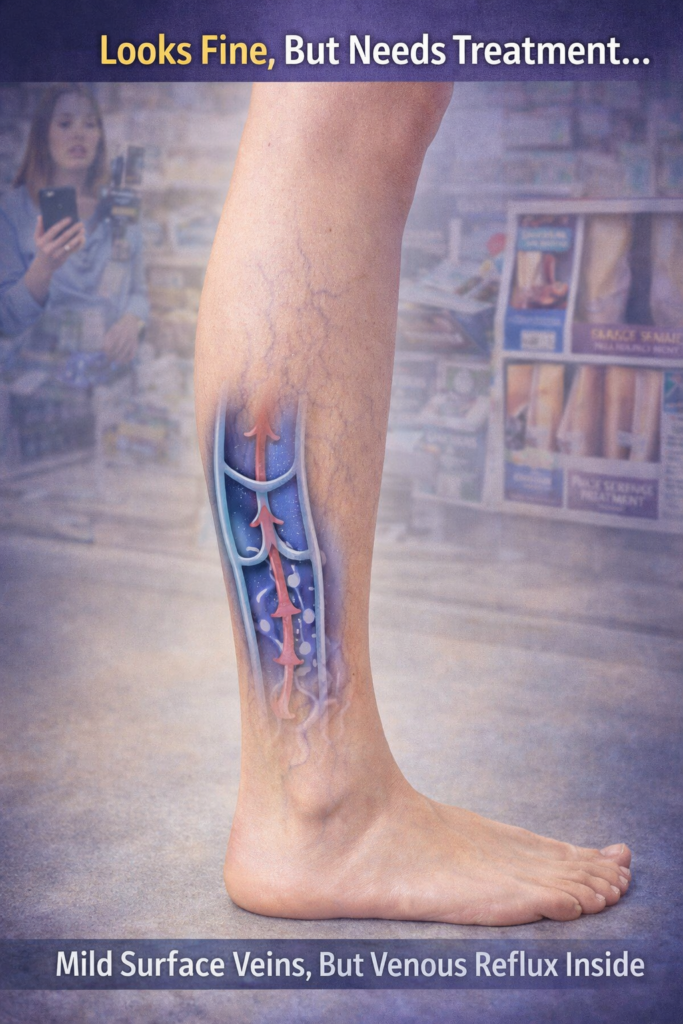
Varicose veins develop when small valves inside leg veins stop working properly. Instead of flowing upward toward the heart, blood pools in the vein and increases pressure.
This can lead to:
- visible bulging veins
- aching or heaviness
- swelling around the ankles
- itching or irritation
- skin discoloration
- inflammation
- or, in some cases, ulcers
Importantly, the visible vein is only part of the story. The underlying circulation changes matter more than what can be seen on the surface.
When varicose veins may not need treatment
Not every varicose vein requires treatment — and that’s reassuring news for many people 🙂
Some veins remain stable for years and cause few symptoms. In these cases, monitoring and lifestyle adjustments may be enough.
Examples include:
- mild visible veins without discomfort
- occasional heaviness that improves with movement
- veins that are unchanged over time
- veins causing cosmetic concern only
Simple steps like staying active, avoiding long periods of standing still, elevating the legs when possible, and wearing supportive compression garments (if recommended) can help manage symptoms.
The presence of varicose veins alone does not automatically mean treatment is necessary.
When treatment may be helpful — even if veins don’t look severe
Here’s the part that surprises many people:
Some veins that look small or moderate can still benefit from treatment.
Appearance does not reliably show what is happening underneath the skin.
It may be worth speaking with a vein doctor if you notice:
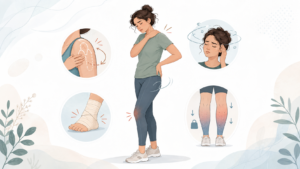
- aching or throbbing legs
- heaviness after standing
- ankle swelling
- itching around veins
- skin color changes
- dry or irritated skin near the ankle
- tender or inflamed veins
- bleeding from a vein
- a sore near the ankle that heals slowly
These signs can suggest that circulation in the affected vein is not working efficiently — even if the vein itself doesn’t look dramatic.
Why appearance alone can be misleading
It’s natural to assume bigger veins equal bigger problems. But vein disease doesn’t always follow that rule.
Some large veins are mostly cosmetic. Others that look subtle may be connected to deeper circulation changes affecting comfort and skin health.
Modern vein assessment focuses on:
- symptoms
- medical history
- skin condition
- swelling patterns
- ultrasound evaluation of blood flow
In other words, doctors treat the condition, not just the appearance.
The cost of delaying assessment
Waiting too long to check symptoms can have real consequences. These are not always obvious at first.
Clinical cost
Symptoms often worsen gradually. Without assessment, people may develop:
- increasing discomfort
- persistent swelling
- skin irritation
- skin discoloration
- fragile skin near the ankle
- slow-healing wounds
Early evaluation can help prevent progression in some cases.
Institutional cost
Delayed care can also place pressure on health systems. Conditions that might have been managed earlier sometimes become more complex over time, requiring longer treatment pathways and more appointments.
Earlier attention often means simpler solutions.
Personal cost
The biggest impact is often personal.
Many people quietly adapt to:
- tired legs at the end of the day
- interrupted sleep
- clothing limitations
- reduced activity
- reduced confidence
Because symptoms develop gradually, they are easy to normalize. Over time, that normalization delays helpful conversations with a vein doctor.
What a proper vein assessment looks at
Instead of focusing only on what veins look like, a vein doctor typically considers:
- whether symptoms are present
- whether symptoms are worsening
- whether swelling occurs regularly
- whether skin changes are developing
- whether veins have become tender or inflamed
- whether circulation is flowing normally on ultrasound
This approach gives a clearer picture of whether treatment would help.
Treatment today is different from what many people expect
Some people avoid evaluation because they assume treatment means major surgery.
That’s rarely the case now
Modern vein care often involves minimally invasive treatments performed with imaging guidance. These options are designed to improve circulation and reduce symptoms with shorter recovery times than older surgical approaches.
Importantly, treatment decisions are individualized. Not everyone needs intervention — and not everyone benefits from the same type.
What we don’t yet know
It’s also important to be honest about uncertainty.
We don’t yet know exactly which mild-looking veins will stay stable and which will worsen over time in any individual person. Appearance alone cannot predict progression.
We also can’t always tell from symptoms alone how circulation is behaving without imaging.
That’s why assessment focuses on both what you feel and what’s happening beneath the surface.
A better way to think about varicose veins
Varicose veins exist on a spectrum.
Some are mainly cosmetic.
Some affect comfort and daily life.
Some signal circulation problems that deserve treatment even when they don’t look severe.
The key message is simple:
Treatment decisions shouldn’t be based on appearance alone.
If veins are causing symptoms, changing over time, or affecting skin health, it’s reasonable to speak with a vein doctor and understand your options.
And just as importantly:
Not all varicose veins need treatment — but some that do may not look serious at first glance.